What’s Growing ON in the field: Winter
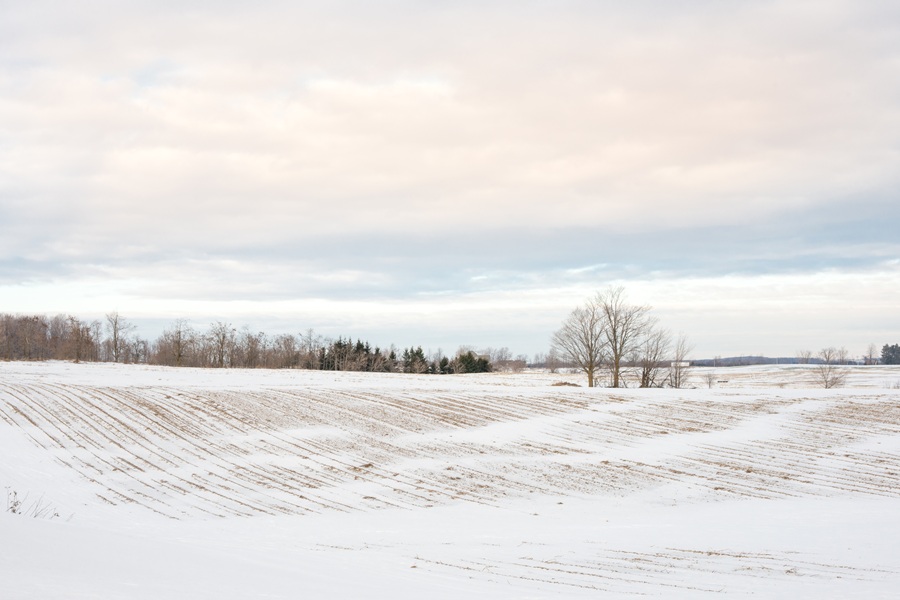
It’s finally here: winter is blanketing the land in a layer of snow. The distinct differences between fields that were noticeable in the fall and summer are now much harder to spot. Grain fields that have been harvested or growing plants are settling into hibernation for the winter months. While fields are covered in snow, there are still some signs to see what may have grown there last year, or even what may currently be in the ground. There is much to explore if you look closer to see what’s going on during the winter season – let’s get into it!
Barley
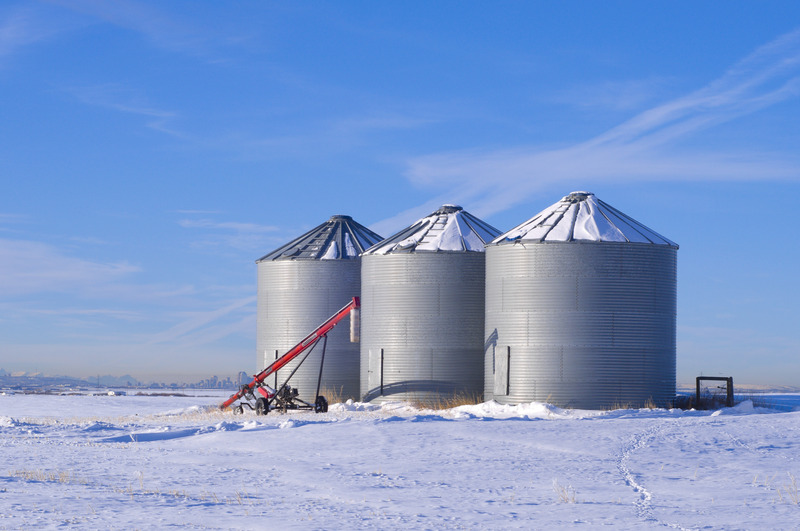
Barley, like many of our other grains, is typically harvested earlier in the season in Ontario. Like oats and wheat, it matures in the summer and is usually harvested before Labour Day. However, just because it’s harvested, doesn’t mean it’s off the farm. Farmers may store barley or other grains in grain bins and monitor market prices, similar to watching the stock market. When prices look favourable, they may sell. In some cases, the grain may be kept on the farm instead, used for animal feed or saved as seed for the following year. This could be the case this month for farmers that grew barley, or even one of the other five grains grown in Ontario.
Corn
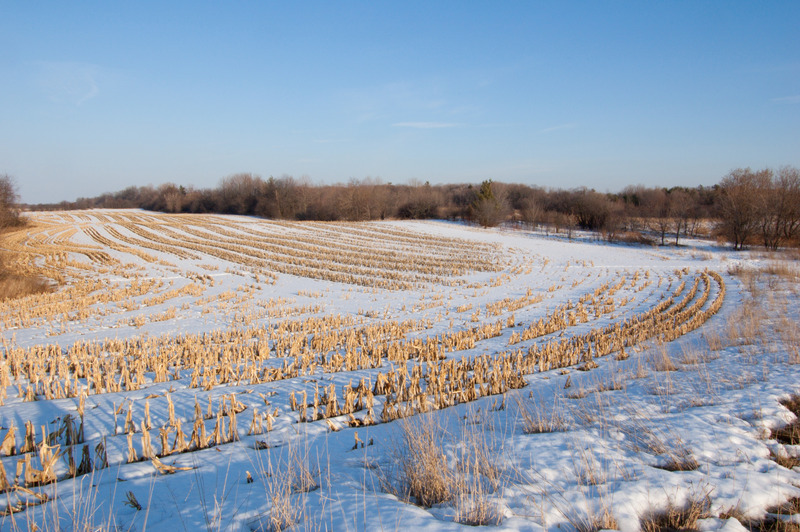
Corn is usually harvested by this time of year, but you may still see where it was previously standing. After the combine collects the grain corn, it leaves behind stalks, leaves, and stems on the field. You may notice the lower part of the stalk still standing in the field this winter.
These leftover parts of the corn plants can have a variety of important purposes. Often, farmers leave it on the soil to break down naturally, helping prevent wind and water erosion while improving the health of the soil. They could also be collected and used to make bedding for animals.
Occasionally, corn is left standing through the winter and harvested in the spring. This can happen for two reasons:
- A municipality may request that a few rows of corn be left at the edge of a field to act as a snow fence, helping prevent snow from drifting onto nearby roads.
- If the moisture level in the corn is too high or snow arrives early, farmers may decide it’s more economical to let the crop dry naturally over winter rather than pay high drying costs. While this can result in slightly lower yields, it may still be the best financial decision.
Oats
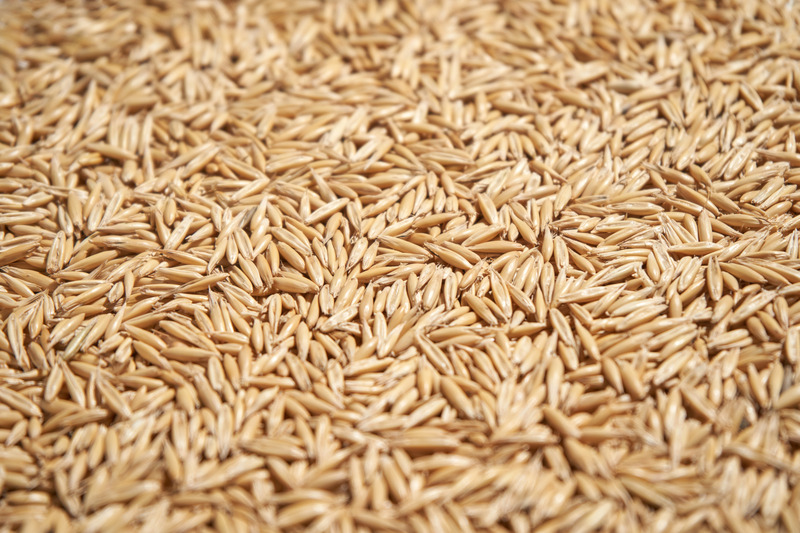
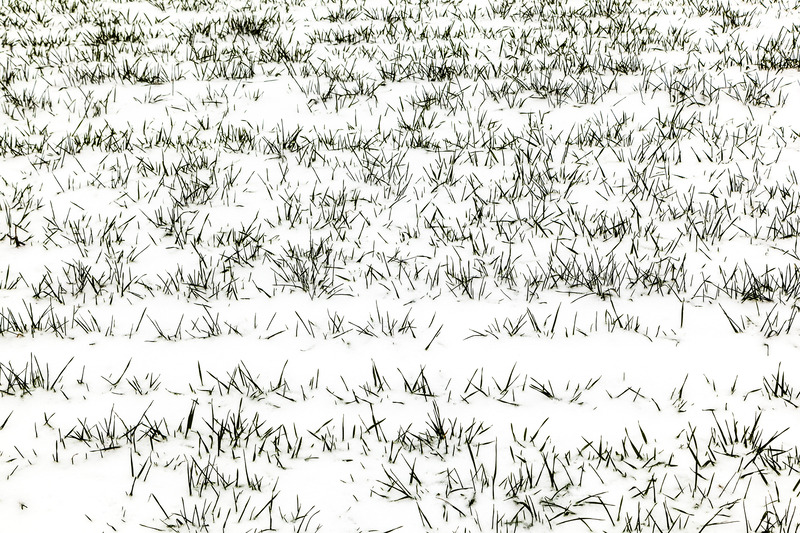
By the time winter rolls around, oats have already been harvested, sold and processed into foods like oatmeal or cereal. Like other grain farmers, oat farmers spend the winter planning for the next growing season. They look at weather predictions and crop rotation schedules to help decide which variety of oat seed to plant. Some farmers may plant oats in the fall as a winter cover crop to help protect the long-term health of their soil. While not likely to survive a winter frost, oats are beneficial as a cover crop as they can help prevent water and wind erosion and provide nutrients for the soil ahead of the 2026 planting. If a field has cover crops growing, you might be able to see some leaves and stems sticking out through the snow.
Soybeans

Farmers usually do not leave soybeans in the field over the winter. Sometimes, if the weather is bad, that may be the only option, but luckily for the 2025 fall harvest, Ontario soybeans were harvested ahead of the snowy weather.
Soybean fields this time of year are snow covered, and depending on how much snow you may be able to see the soybean stalks peeking through the snow.
Harvested soybeans have likely been sold by this time of year, and they may even be on their way across the ocean! Ontario exports over 50% of our soybeans to other countries, with Asian countries like Japan and Malaysia being the largest customers.
Wheat
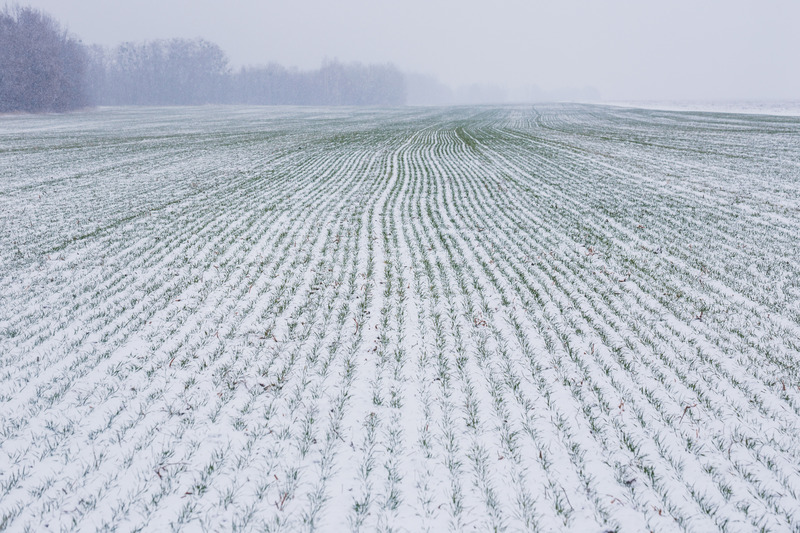
If you’re driving around in early winter and see a field with green plants poking through the snow, you might be surprised to see green growing in the fields in the winter! Many people ask us about this crop. This is winter wheat; a type of wheat that is planted in the fall and grows until winter is in full force. Once the snow accumulates and it gets too cold, the winter wheat goes dormant (hibernates) under the snow. Then in the spring when the snow melts, it will continue to grow.
Winter on the farm
As you can see, many fields aren’t actively growing crops during the winter. It may appear that this season is downtime for grain farmers but take a closer look and you will soon see that the work hasn’t stopped, the priorities have just changed. Farmers use the winter to focus on lots of other parts of their business, whether it’s taking care of the soil, finances, planning, equipment maintenance or more.
This is just a short overview of some of what is going on during the winter on Ontario grain farms. Winter is the time for our fields to rest and gives farmers a chance to catch up and plan for next year. Come spring, these fields will be ready for a whole new crop again.