What’s Growing ON in that Field: Spring
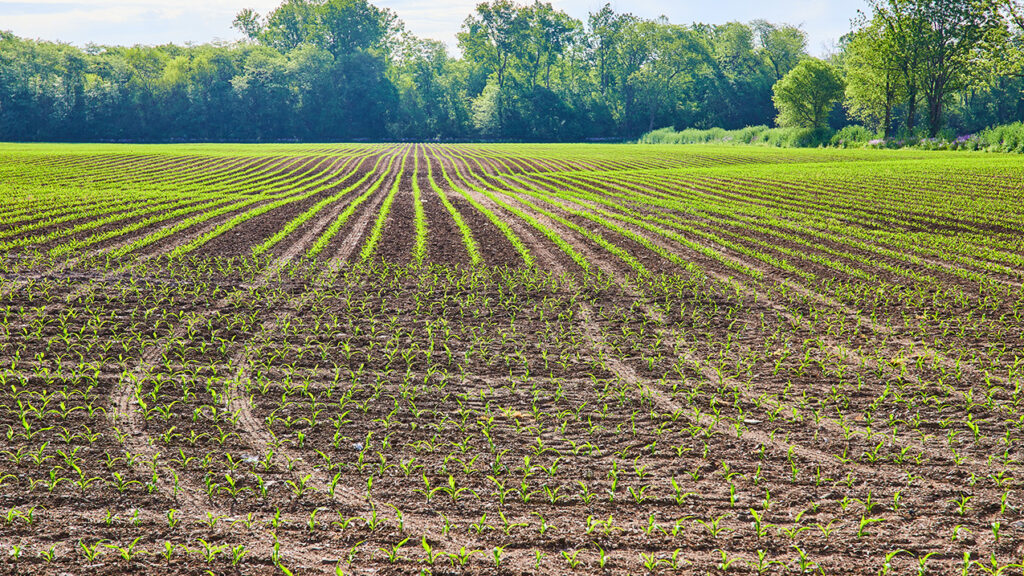
Over the course of the past year, we have explored the differences observed across farmers’ fields in the summer, fall, and winter. Now, the Good in Every Blog has come full circle into spring, the beginning of the growing season for most of our grains. It’s a busy time of year for farmers, as they prepare their fields, plant their seeds, and deal with changing weather conditions. At the same time, spring can also be a very exciting time on the farm, as changes in the field start to become apparent and plants emerge from the soil.
As we start to see changes present themselves in grain farmers’ fields, there are numerous clues we can use to learn more about what has been planted this year.
Barley
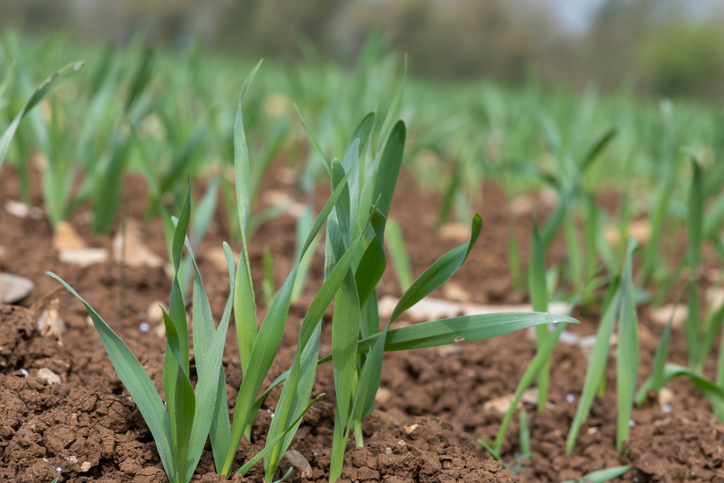
Barley, oats, and wheat are some of the earliest crops to be planted in Ontario because they can handle cooler spring temperatures better than corn or soybeans. As a result, farmers can plant them as soon as the ground is dry enough, making them some of the first crops to emerge each season.
One thing that can make identifying barley tricky is that barley, corn, oats, and wheat are cereal crops, meaning they are part of the grass (Poaceae) family. Early in their development, these crops can look very similar, but over time they begin to develop distinct features that help set them apart. As barley grows, it will produce long, bristle or hair-like pieces that grow out of the top of the plant. These pieces are called awns, and they can make a barley field look fuzzy. Once the awns have formed, it is much easier to identify if barley is growing in a field.
Barley, oats, and wheat are some of the earliest crops to be planted in Ontario because they can handle cooler spring temperatures better than corn or soybeans. As a result, farmers can plant them as soon as the ground is dry enough, making them some of the first crops to emerge each season.
One thing that can make identifying barley tricky is that barley, corn, oats, and wheat are cereal crops, meaning they are part of the grass (Poaceae) family. Early in their development, these crops can look very similar, but over time they begin to develop distinct features that help set them apart. As barley grows, it will produce long, bristle or hair-like pieces that grow out of the top of the plant. These pieces are called awns, and they can make a barley field look fuzzy. Once the awns have formed, it is much easier to identify if barley is growing in a field.
Corn
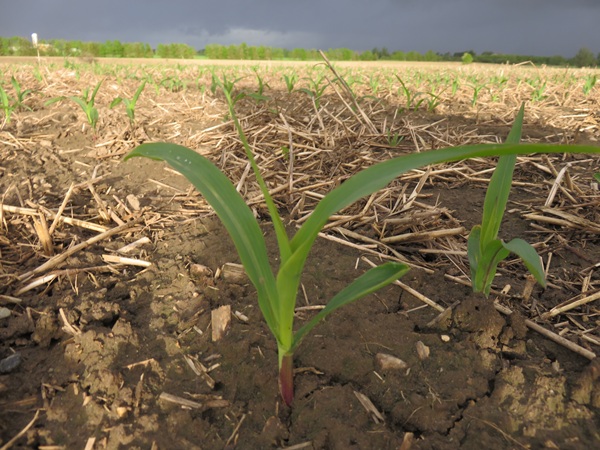
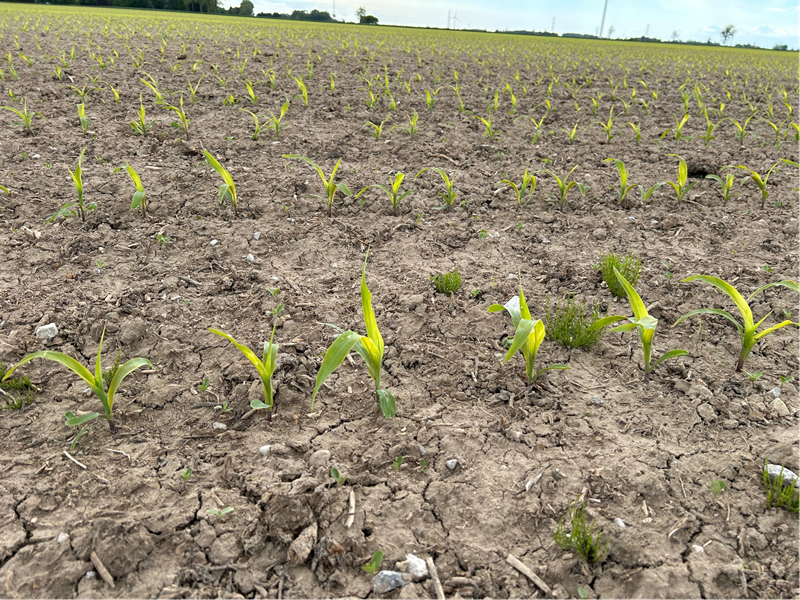
Corn is planted in the spring around when the soil begins to dry and warm up enough for planting. Wet or cool soil isn’t a good environment for seeds to begin growing. It is important for farmers to plant their corn early and quickly as it has a longer growing season than some of our other grains, like soybeans. Both corn and soybeans also generally require higher soil temperatures to grow, so they may take a little longer to appear.
When it first sprouts, it can be difficult to tell what plant is growing since all members of the grass family, including corn, generally look similar when emerging. A clue that corn may be growing lies in the distance between rows. Corn is typically planted in rows about 20 to 30 inches apart, which is wider than many other grain crops. Also as corn grows, the leaves form a cone which funnels water towards the roots of the plant, which can serve as another indicator in the later weeks of spring.
Oats
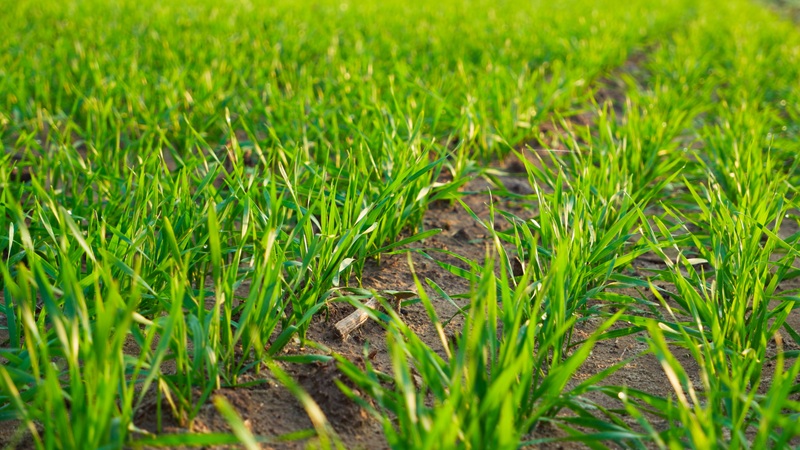
When spring arrives, oats may have already been growing in a farmer’s field. Oats are a common cover crop, which are used to protect the soil over the winter, so you may see oats’ plant residues in fields this spring. Oats planted in the spring, meanwhile, will still be green and short, with thin leaves.
However, in addition to being difficult to distinguish between each other, some grains can also be difficult to distinguish from pasture or hay fields early on. One key difference between oat fields and pastures are the straight rows created by planters during the spring, which are especially visible shortly after emerging. Barley, oat, and wheat fields will also appear more uniform, because they will be planted uniformly without any other seeds or crops while pastures or hay fields often will have multiple types of grasses of differing heights and colours.
Soybeans
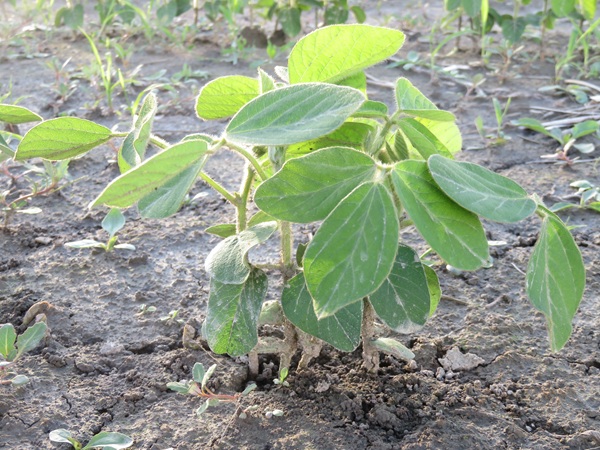
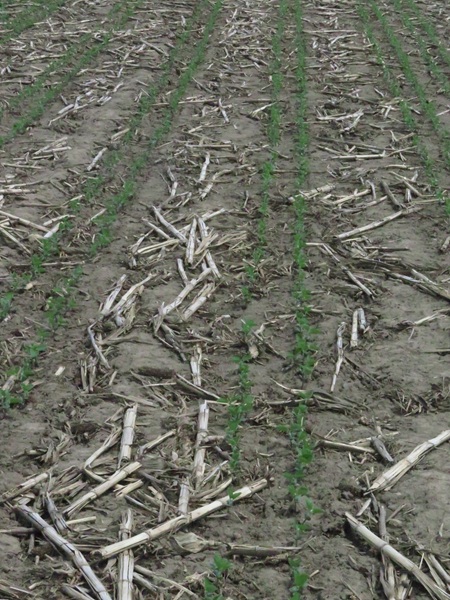
Most farmers plant their soybeans after they have finished planting their corn, or during a shorter growing season, may even opt for growing mainly soybeans, which don’t require as long to mature. Soybeans are generally easier to identify compared to our other grain crops. Emerging soybeans can be identified by having round leaves, rather than thin, pointy leaves, and tend to form wider, bush-like shapes.
You may notice that a field has different grain crops in it from one year to another; this is called crop rotation. Soybeans can play an important role in crop rotation, since they help add nitrogen to the soil, one of the key nutrients plants need to grow, which can benefit future crops planted in the same field.
In common crop rotations soybeans will be planted after a corn crop, thus in the picture above you may notice corn stalks in between the soybean rows. These are what we call plant residues – natural, leftover plant parts from the previous year’s crop that will decompose and add nutrients into the soil as the soybeans are growing.
Wheat
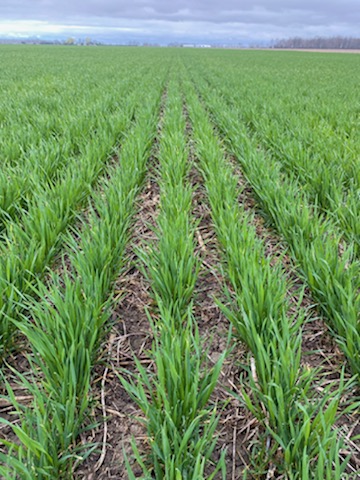
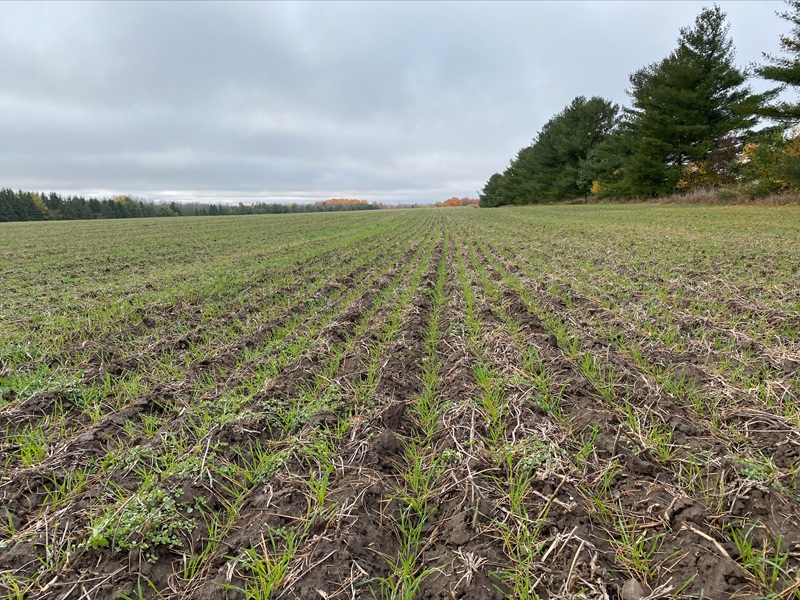
Here in Ontario, we have two main types of wheat: winter wheat, which is planted in the fall and is dormant under the snow, and spring wheat that is planted in the spring like barley and oats. It is very hard to tell the two apart. One clue may lie in its size, as winter wheat will be greener, and have a taller leaves than spring wheat, as you can see in the left image, which is winter wheat, compared to the right, which is spring wheat. As winter wheat was planted in the fall, it has had additional time to grow so fields will be more developed this time of year compared to spring planted wheat. Like barley and oats, wheat closely resembles grass early on, making planting rows one of the best visual clues.
Spring is a time for new beginnings, including on the farm. Lots of important decisions will shape what a grain farmer does in the year ahead. Often, many of these choices will have already been made during the winter, but it is necessary for farmers to be adaptable to change, as weather, timing, economic factors, and more that can all have a big impact on what needs to be done. Keeping an eye out on the fields throughout the year helps farmers in making the right decisions to plant, grow, care for and harvest their grain crops.