#FarmHerOntario: Charlene Whattam-Dick
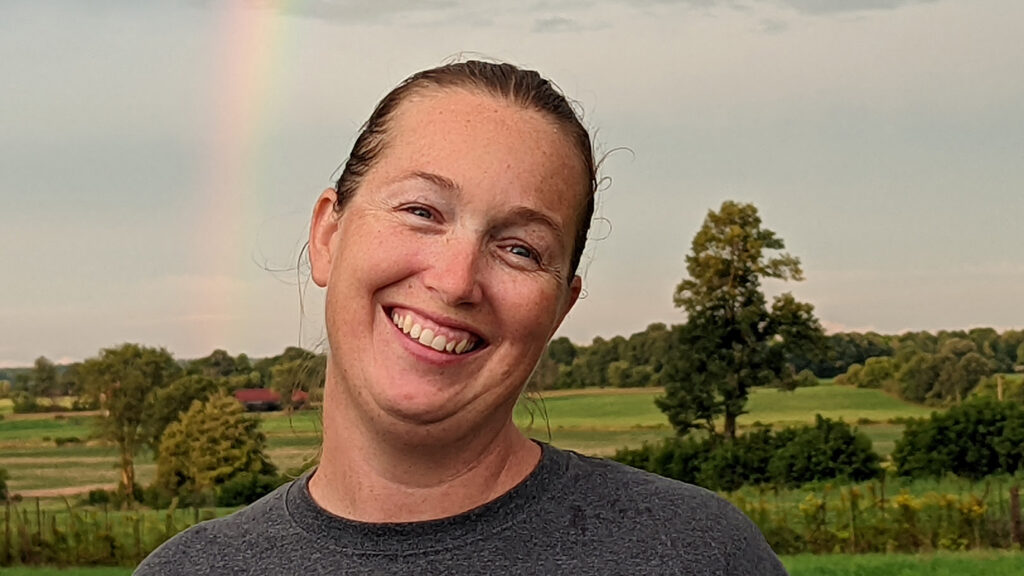
Did you know that 2026 is the International Year of the Woman Farmer? Join us throughout the year as we spotlight our #FarmHerOntario farmers to showcase the important role women grain farmers play in our food system. This month, we join Charlene Whattam-Dick outside Douglas, Ontario, to explain more about how she innovates on the farm as a crop advisor and grain farmer.
My name is Charlene Whattam-Dick. My husband, 2 daughters and I operate a 160-acre farm just outside the village of Douglas an hour west of Ottawa. We have 126 acres of grains, along with some pasture, and Christmas trees on our other acres. Though we have grown corn, soybeans, and wheat on our farm, recently soybeans and wheat form the majority of our crops.
My husband and I both work off the farm, which means we hire custom operators (farmers who work on other people’s farms) with specialized and appropriately sized equipment to help plant, apply crop protection (pesticides) and harvest our crops. Our farm doesn’t have enough acres to justify the cost of the equipment we would need to do the jobs ourselves, and working full-time doesn’t always leave us the time to manage our crops. This is also why we mostly grow soybeans and wheat now. Soybeans and wheat are usually harvested during times of the year where the days are longer, and soil conditions are more ideal (not too wet).
Working on the farm is an integral part of all of our lives. Because of this, we feel strongly that we should work to improve our farm and leave it in better shape for the next generations. We have invested in our farm by working to remove fence lines and have incorporated some grassed waterways along with tile drainage (perforated pipes under our field) to help manage water flow.
Besides working on the farm, I am also a Certified Crop Advisor, which means I help manage the selection of crop varieties, crop protection products and do all the soil sampling to manage nutrients for farmers. I am the scientist on our farm. I like to try new things and look to improve our farm and our yields (how much our soybeans and wheat crops can grow) consistently. I try to keep things simple and make logical choices that don’t negatively impact the people we count on to help us plant, protect, and harvest our crops. It is a difficult industry already, whatever I can do to make things easy is a win.
What I enjoy most about farming is the variety of options and opportunities there are. Nothing is static, and things are always changing day to day, season to season, year-to-year. We can see the improvements we have made in the physical results in the fields: historically wet areas that now grow high yielding crops, reduced disease in crops that have had issues in previous years, shifts in weed populations we can evaluate. It gives a real feeling of accomplishment to see a tangible result to the work done, and then to think, “what next?”
My children also have the opportunity to be outside working with their hands and having the space to enjoy recreation. Over the years here we have had several small ventures that have added to our learning and helped us teach our children about decision making, entrepreneurship, and responsibility. These are lessons that my children will be able to take with them as they grow and will build on them throughout their lives. We are blessed to have the opportunity to farm and be able to build these small enterprises on the backbone of grain farming the majority of our acres.