Steps farmers take to protect soil health
Soil health is a priority on Ontario’s grain farms, and protecting and enhancing Ontario soils is year-round work for many farmers.
In the fall, #YourFarmers are busy harvesting, but they are also taking important steps to protect soil health before winter.
Here are some of the ways farmers protect soil health on their farms:
Plan soil testing
While soil testing is typically done in the fall or spring, the data collected in the fall can help farmers plan for their farm’s soil management. Knowing the soil’s nutrient levels and pH helps farmers make informed decisions about what grains to plant the following year and what those crops will need to grow.
Plant cover crops
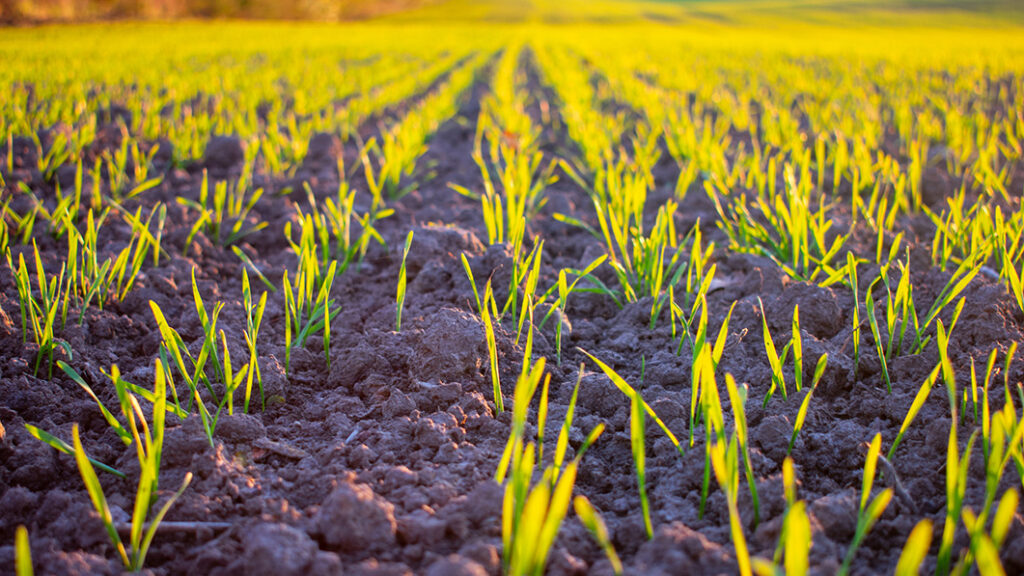
Cover crops like rye, clover, radish or forages are planted after a grain field is harvested to protect the soil during the off-season like late fall, winter or early spring.
Often, cover crops are grown specifically to protect and enhance soils, rather than to be harvested as a sellable crop. When they are tilled into the soil or sprayed with a pesticide, they decompose and release nutrients as they break down. These nutrients are then available for the next season’s growing crop. They can also prevent wind or water erosion by holding the soil in place and can help suppress weeds through their root systems.
In Ontario, farmers often plant cover crops in the late summer/early fall after the summer grains or early fall grains fields are harvested to protect the fields going into the winter.
Avoid soil compaction
Soil compaction happens when soil particles are pressed closely together, creating compacted sections or fields. This can make it harder for water to move into the soil and harder for plant roots to grow into or through the soil. To minimize soil compaction, farmers can take several steps.
- Farmers limit the use of heavy machinery when the ground is wet or frozen.
- Farmers can establish permanent paths or lanes for vehicles, reducing traffic across the field.
- Farmers may also invest in technology and equipment enhancements that reduce the weight of equipment across the machine’s footprint, rather than concentrating it in one area. For example, wider tires or tracks help spread the weight of a tractor across the field, instead of concentrating it in one spot.
Use residue as a cover
Leaving crop residues like leaves, stalks, straw, or stems on the field surface creates a protective layer that insulates the soil, retains moisture, and reduces erosion from wind and water.
By taking steps like testing soil, planting cover crops, reducing compaction, and leaving crop residue in place, farmers help protect the soil that supports healthy grain crops. These practices are part of the year-round work #YourFarmers do to care for the land today and keep Ontario soils productive for the future.