Day in the Life: August on a grain farm
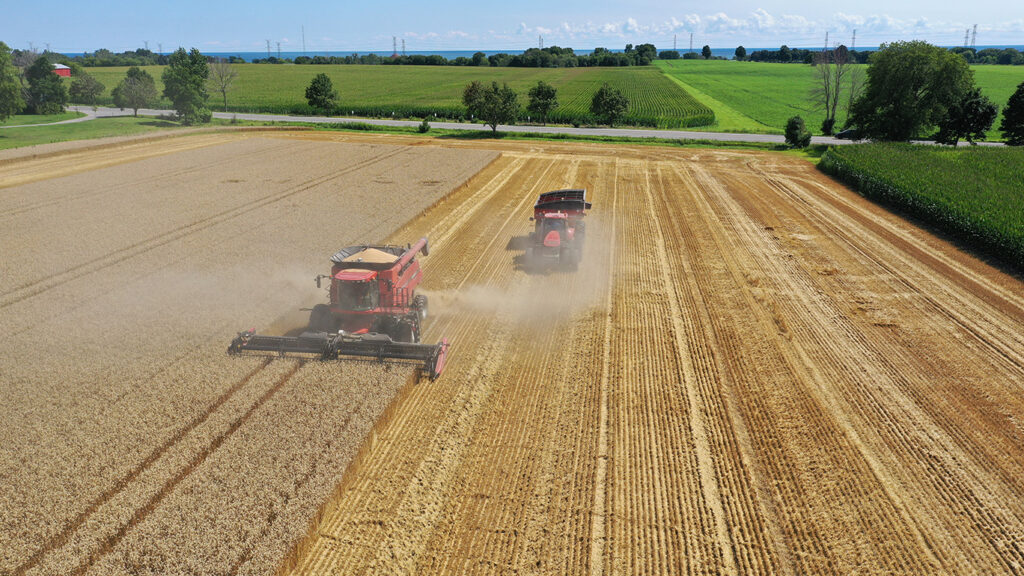
Hello August! Grain farms are busy all year, but August is a special time with many different jobs happening. Across Ontario there are over 28,000 grain farmers each with unique farms – so there is a lot of variability when it comes to farm work especially this time of the year.
Below is a list of some things grain farmers are working on this month, ahead of the busy fall season.
Harvest
Majority of Ontario’s grain harvest begins during the summer months when wheat, barley and oats will start to be harvested. This harvest then carries into the fall when corn and soybeans come off the fields.
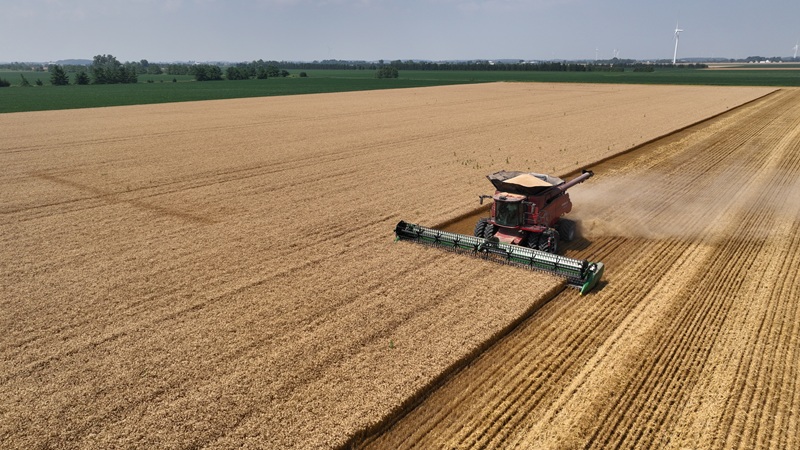
Wheat: Wheat is Ontario’s third largest grain crop. It can be planted either in the fall (called winter wheat) and harvested in July/August, or planted in the spring months (called spring wheat) and harvested late summer/early fall. During the month of August you might see farmers in their fields harvesting their wheat crops.
Straw
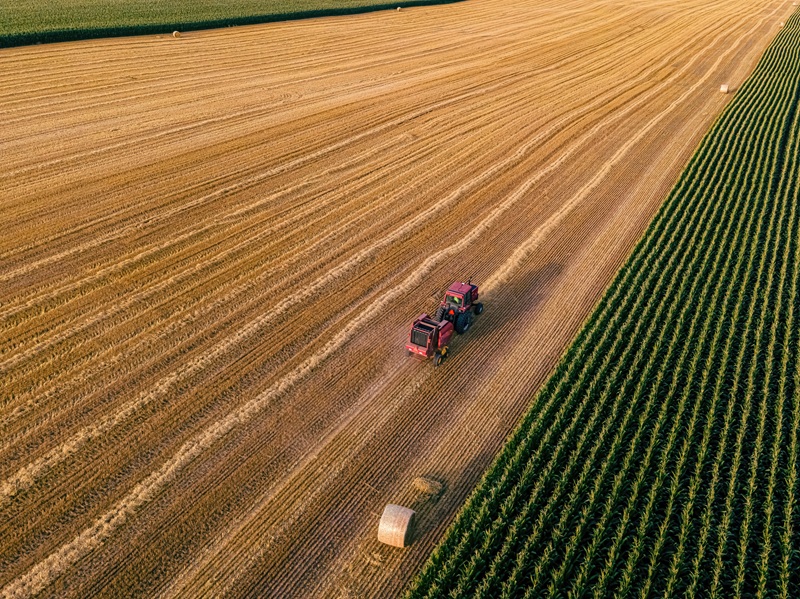
With barley, oat and wheat harvest comes straw management. Straw is the (not to be confused with hay!! There is in fact a difference: check that out here.) leftover plant parts of cereal grain plants (barley, oats and wheat) after harvest that is baled or collected up to be used as bedding for farm animals. The top of wheat and oat plants contains the seeds – that will be harvested to make food. But the rest of the plant is left behind by the combine in the field, to be baled up and then used as livestock bedding. Straw is yellow, and you will see straw bales in fields after harvest in the summer and early fall.
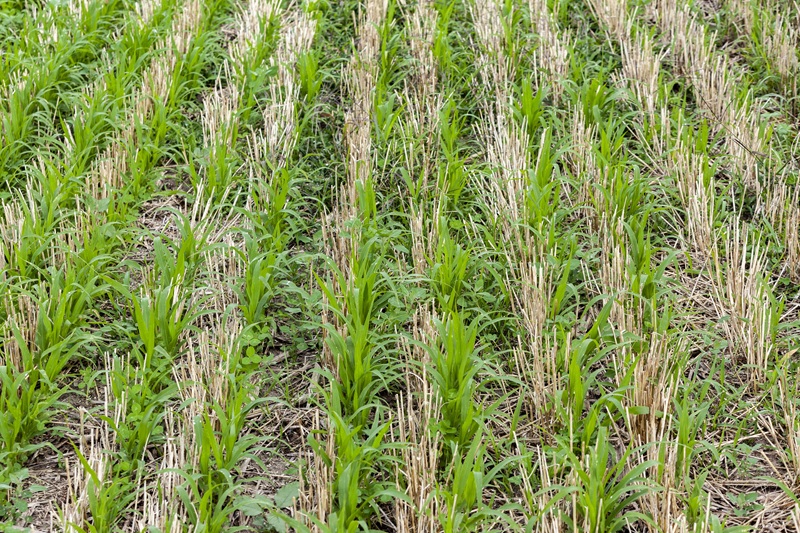
Additionally, some farmers will chop or spread their straw across the fields while harvesting barley, oat or wheat crops. This will then live on top of the soil to decompose over the fall and winter to release nutrients into the soil.
Crop scouting
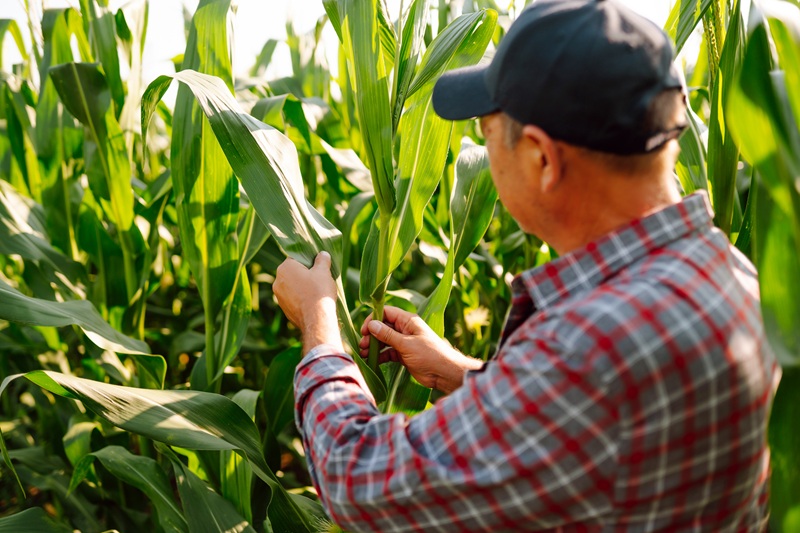
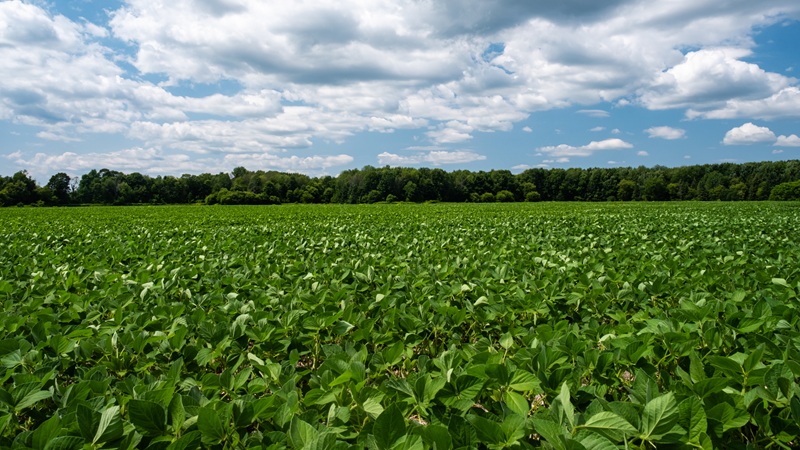
In August you may also see a lot of farmers walking or checking their fields for any health issues, pest threats and how their crops are growing. This practise is called crop scouting, and while done throughout the growing season is still a big part of August’s Day in the Life. With Ontario’s corn and soybeans still growing this month and starting to develop the corn cobs and seed pods many farmers will be keeping a close eye on their fields. They’ll be looking for any pest issues that might impact seed development and evaluating how well the crops are growing to get an estimate to what their harvests may look like in the coming months.
Soil testing
Once those barley, oats or wheat grain fields are harvested, farmers across the province may start testing their soils – probing and removing samples of the layers of soil across fields to send away for testing. Results include the pH of the soil, what nutrients are available, and other soil health indicators are then sent back to the farmers. They can then use this to determine their soil health plans for nutrients going into the fall and winter ahead of their next grain crop.
Nutrient management
Soil testing leads us to nutrient management! Nutrient management is a term used to describe how farmers are handling the nutrients (like nitrogen, potassium, phosphorous etc.) that are needed for their grain crops to grow. Testing the soil gives the farmers results on what are nutrients are in the soil, and what ones may need to be added. Summer is the time of year when farmers can plant cover crops, or start their spring nutrient plans based on what is existing in the soil after summer harvest.
Cover crops
A cover crop is grown by farmers primarily to benefit the soil. Cover crops help soil by preventing soil erosion, suppressing weeds, improving soil fertility and quality. Things like clover, alfalfa and rye can be grown as a cover crop. August is one of the times of the year where farmers may choose to plant their cover crop after the summer harvest is wrapped up. This will then provide these fields with a plant cover going into the fall and winter. Farmers can also use cover crops to improve soil nutrients. Leaving a cover crop on the field to decompose will increase nutrients in the soil. This can help improve soil quality for the next crop grown in that field and reduce the number of fertilizers farmers will purchase and apply.
Harvest prep and maintenance
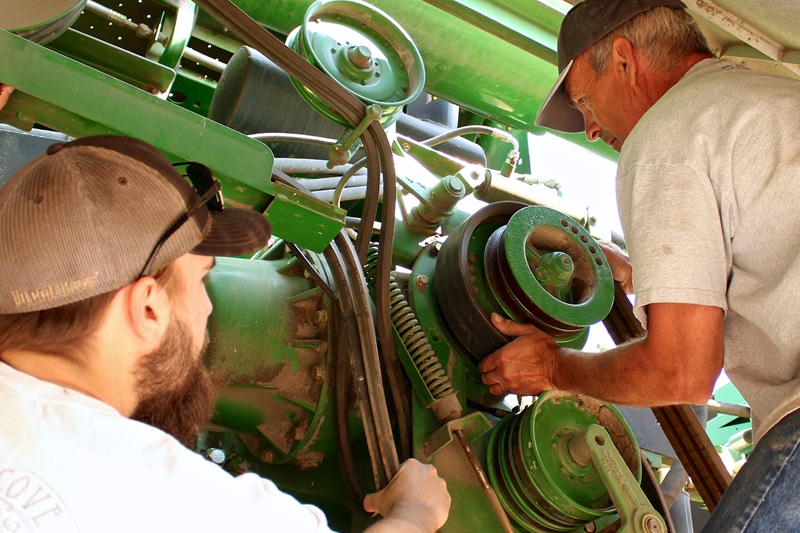
Grain farmers may also take the time this month to prep and complete maintenance on their equipment or grain handling facilities ahead of the fall harvest months.
While grain farming is busy majority of the year, August can be a variable month for many farmers. Each farm is unique with different priorities, needs and work flows so this may be the month of preparation for fall harvest, or a busy time of year with fields work.