Seeds of Success: Empowering Educators with STEMterprise
By Andrea Vogan, Instructional Program Leader FSL for HDSB
In the busy world of education, it is no secret that teachers can often feel overwhelmed. Between evolving curriculum and the diverse needs of our students, the idea of integrating new resources can sometimes feel like one more thing piled onto an already full program. However, our recent Professional Development session with Good in Every Grain proved that meaningful integration doesn’t have to be daunting — it just needs a clear starting point.
We spent our time together exploring one of their free resources — STEMterprise. It’s a unique, curriculum-based resource that helps students develop STEM skills while learning where their food comes from. Best of all, it’s free and available in both French and English.
Meeting Teachers Where They Are
One of the most significant takeaways from the session was the realization that STEMterprise offers many entry points for teachers. Whether you are looking to enhance a science unit, dive into social studies, or strengthen literacy, the program is designed to be flexible. You don’t have to overhaul your entire long-range plan; you can simply find the door that is already open in your classroom, from simple seed-planting kits to full entrepreneurship projects.
Right now, the STEMterprise project is recommended for Grade 3, but during our session the facilitators also shared excellent ideas for connecting the learning to Grade 2 and Grade 4 science expectations, making it very workable for combined grade classrooms, something many of our teachers were excited to see.
Hands-On Learning: Analyzing the Competition
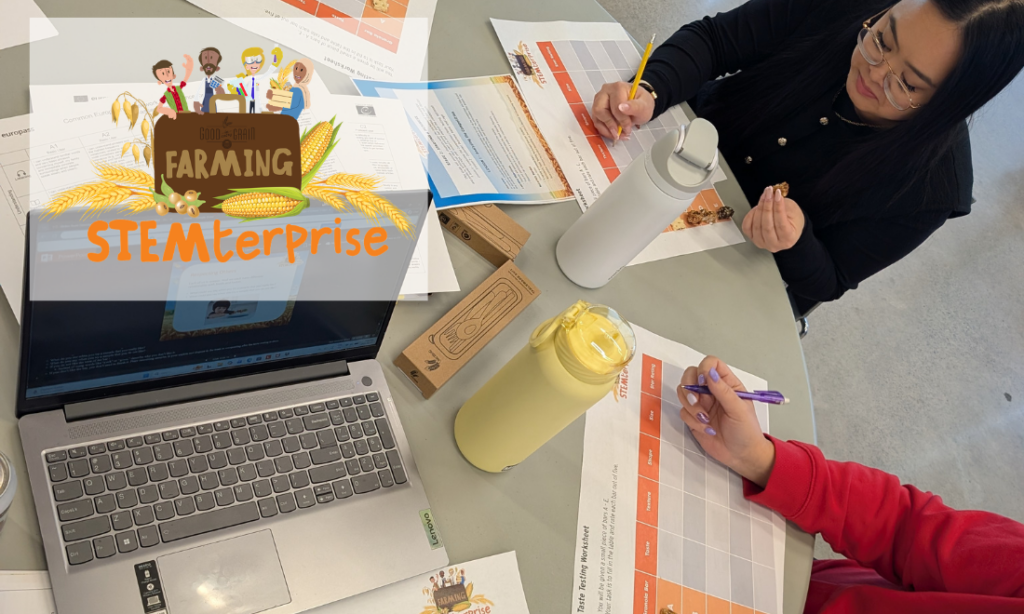
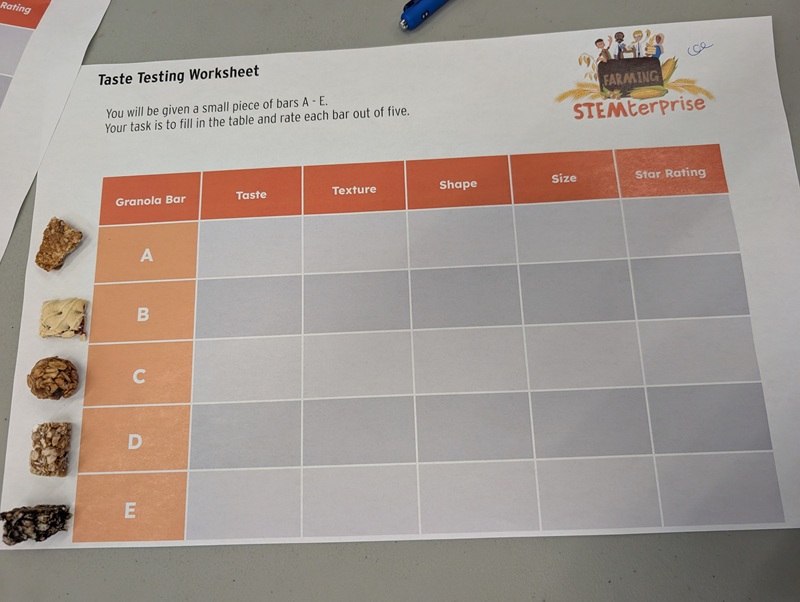
To see the resources in action, we dove into Stage 2, Lesson 1 of the STEMterprise project: Analyzing the Competition. In this stage, students transition from learning about grains to starting a business. Working through this lesson in person allowed us to experience the granola bar taste test exactly as our students would.
We explored how to:
• Analyze market variables: Assessing taste, texture, and ingredients like barely, oats, and wheat.
• Integrate Data Management: Using the results to create polls and frequency tables to determine what a “winning” granola bar looks like.
• Support Oral Language: We created a chat mat to facilitate our discussion, providing a visual scaffold that allows students—especially in FSL or diverse classrooms—to use high-frequency vocabulary to express their preferences and observations with confidence.
• Adapt the activity: If taste testing is not available at your school, students can still fully experience this lesson through their other senses. For example: What does the bar feel, look, or smell like?
Expert Support and Next Steps
The success of the day was due in no small part to our hosts. Their deep knowledge of Ontario grain farming and the farm-to-table journey brought the STEMterprise learning experience to life. They didn’t just provide lesson plans; they provided the real-world context of how local agriculture connects to our daily lives and our students’ futures.
The feedback from participating teachers has been overwhelmingly positive. Many shared that they now feel fully equipped and ready to bring STEMterprise into their classrooms. What started as a PD session has turned into a boost of confidence, proving that with the right resources and a bit of collaboration, we can bring Ontario’s fields to life for our students.
We were also excited to learn that Good in Every Grain is currently piloting a new Grade 5 STEMterprise project in several of our schools. If the enthusiasm from this session is any indication, teachers are eager to see the program continue to grow across grade levels. Many of us are already hoping that future versions might extend into the primary grades as well. Our youngest learners would love this kind of hands-on learning too!
Teacher-to-Teacher: Tips for Your First Session
Based on our PD discussions and feedback, here are a few ways to hit the ground running with STEMterprise:
- Start with the Why: Use the introductory videos from the program to show students where their food comes from. It grounds the business side of the project in real-world Ontario agriculture.
- The Power of the Chat Mat: Don’t just use the chat mat for the taste test! Keep it visible throughout the project so students have a consistent word bank for discussing textures, flavors, and marketing ideas.
- Cross-Curricular Magic: Look for opportunities to integrate. The data collection lesson is a perfect way to hit your Math (Data) and Language (Oral Communication) expectations simultaneously.
- Accessibility First: If you’re worried about timing, remember that you don’t have to do every stage. Even completing just Stage 1 (Growing) or Stage 2 (Market Research) provides immense value and high student engagement.
- Lean on the Resources: The lesson plans are incredibly detailed. You don’t need to be an expert in agriculture to teach this. The program provides the knowledge for you. All resources are available in English and in French, including editable slide decks.
The enthusiasm from this session has been incredibly encouraging. Based on the overwhelmingly positive feedback from educators, another Professional Development session will be offered in April for teachers who would like to explore the resource and experience the lessons firsthand.
If you’re interested in bringing STEMterprise into your own classroom, the full resource is available through Good in Every Grain.
You can also visit the blog to read stories and classroom spotlights from educators already using STEMterprise with their students.