Fall On the Farm with #YourFarmer Kayla Veldman
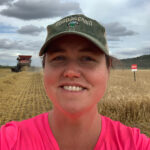
Meet #YourFarmer, Kayla Veldman! Kayla is an egg, pullet, and grain farmer from Embro, Ontario. Her love for agriculture took root early, eventually leading her to the University of Guelph, where she graduated in 2017 with a Bachelor of Science in Agriculture. After graduation, she worked off the farm as an agronomist before jumping at the opportunity to return home and farm full-time with her family in 2020.
“I never expected to end up back on the farm,” she reflects. “But once I studied crop science and discovered agronomy, I knew agriculture was where I belonged. Coming home felt like the natural next step, and I haven’t looked back.”
Today, Kayla’s days are filled with caring for crops, supporting her family’s poultry operation, and volunteering as a puppy raiser with Autism Dog Services. This fall, Kayla invited Good in Every Grain along during one of the busiest—and most exciting—times of the year: corn harvest.
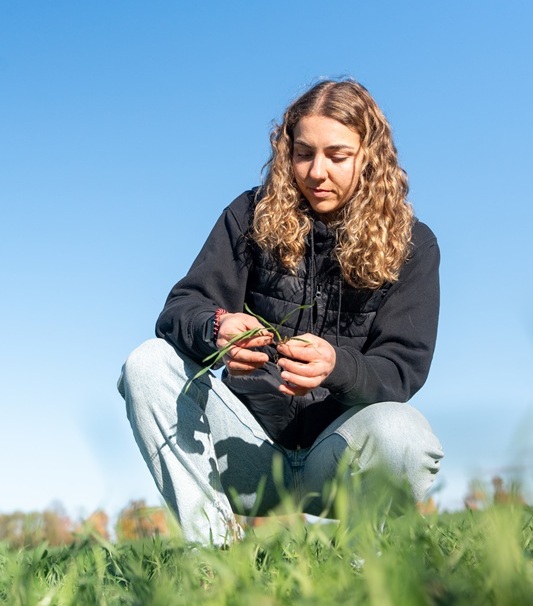
Ontario farmers typically start harvesting corn in mid-October, aiming to finish by late November. One of the first signs corn is ready comes from the field itself. As it matures, the plants turn from green to brown—an early cue for Kayla to start checking cobs and testing moisture. A few hand samples can tell her a lot about whether the field is ready.
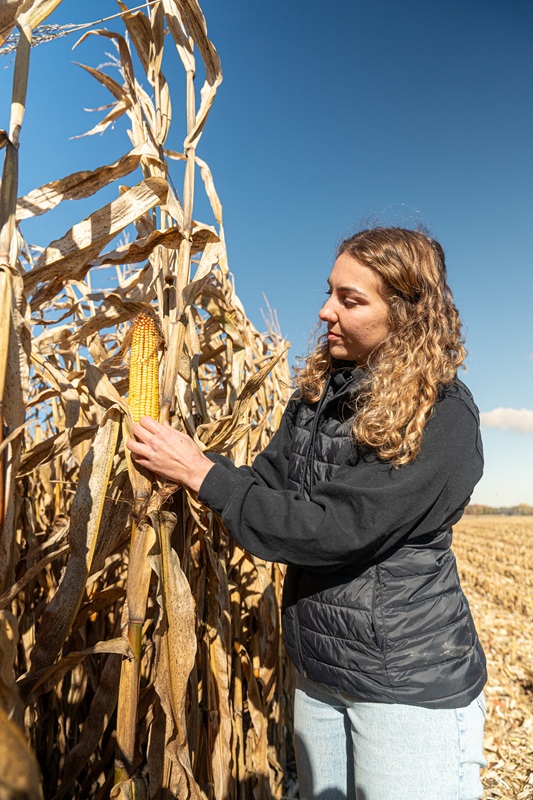

Corn needs just the right combination of sunshine, heat, rainfall, and nutrients to thrive. Kayla pays careful attention to all of it. “Corn is a full-season crop for us,” she explains. “If we don’t have a hot enough summer, or if we get an early frost, the crop might not fully mature.” And timing matters: rain during pollination is especially important for strong yields, or the amount of harvested seeds the corn field can produce.
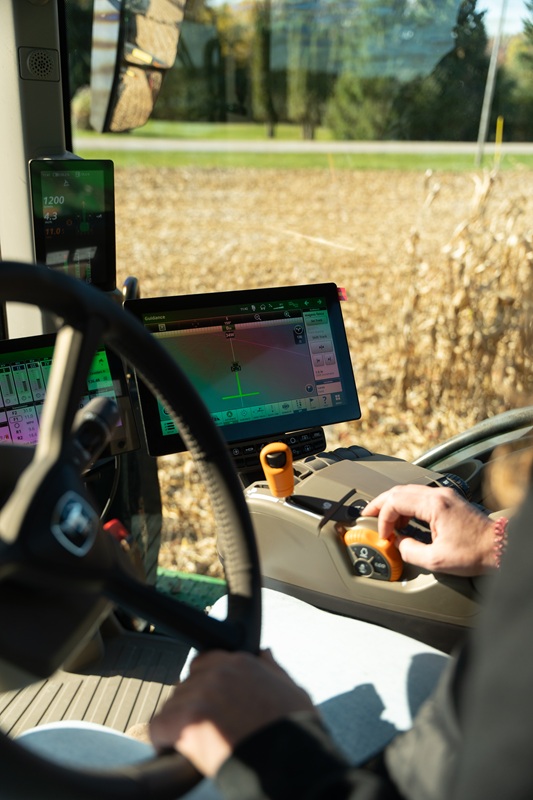
Some of these factors are outside a farmer’s control—but many aren’t. That’s where Kayla’s agronomy background comes in. She uses crop planning, in-field scouting, and technology to help ensure each field has the nutrients it needs, without over-applying and letting anything go to waste.
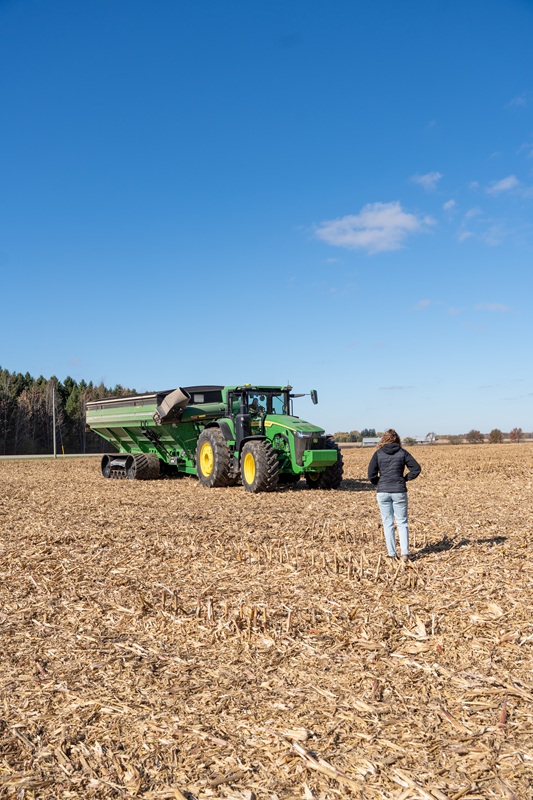
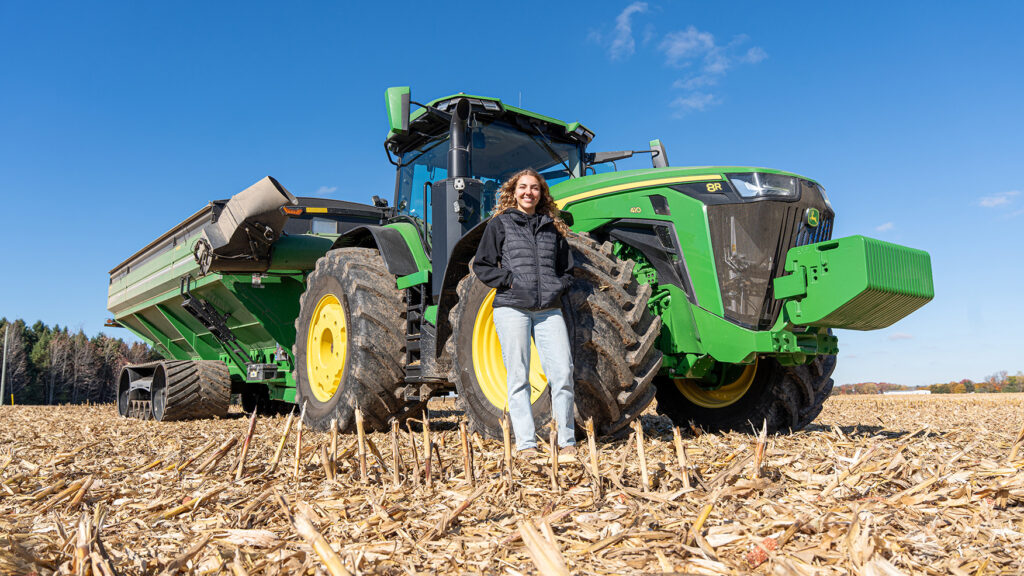
On any given day, Kayla’s responsibilities shift with the season, but during corn harvest, her main job is keeping everything moving. That means lots of time spent in the field operating the machinery that keeps harvest rolling, namely the grain buggy. This piece of equipment is pulled behind a tractor, and transports the harvested corn seeds from the combine to waiting trucks.
“My role is running the grain buggy,” Kayla explains. “It’s my job to make sure the combine never stops moving.”